Beijing Travel Guide: Where 3,000 Years of Imperial History Meets a Futuristic Global Megacity
Beijing is not just a capital city—it is a layered civilization built in stone, marble, wood, and memory.
Few places on Earth combine ancient imperial power, revolutionary history, cutting-edge architecture, and everyday street life as intensely as China’s political and cultural heart. In one direction, you can stand on the same ground where emperors ruled an empire for centuries. In another, you are surrounded by glass towers, high-speed rail networks, and one of the world’s most advanced urban systems.
For international travelers, Beijing offers something rare: a destination where history is not preserved behind glass—it is still alive in the streets, temples, neighborhoods, and mountains surrounding the city.
This guide is designed for travelers searching for Beijing travel guide, China capital tourism, Great Wall experience, Forbidden City itinerary, and cultural China travel, offering a deeply immersive route through the city’s most iconic and meaningful places.
Where Is Beijing?


5
Beijing is located in northern China and serves as the political, cultural, and educational center of the country.
With a history spanning more than three millennia, Beijing has been the capital of multiple dynasties and remains one of the most influential cities in the world today.
It is a place where:
- Imperial China was shaped
- The Great Wall connects through mountains
- Revolutionary history unfolded
- Modern China rapidly evolved
- Traditional neighborhoods still survive
For many travelers, Beijing is the essential first stop for understanding China.
1. The Forbidden City: The World’s Largest Imperial Palace


6
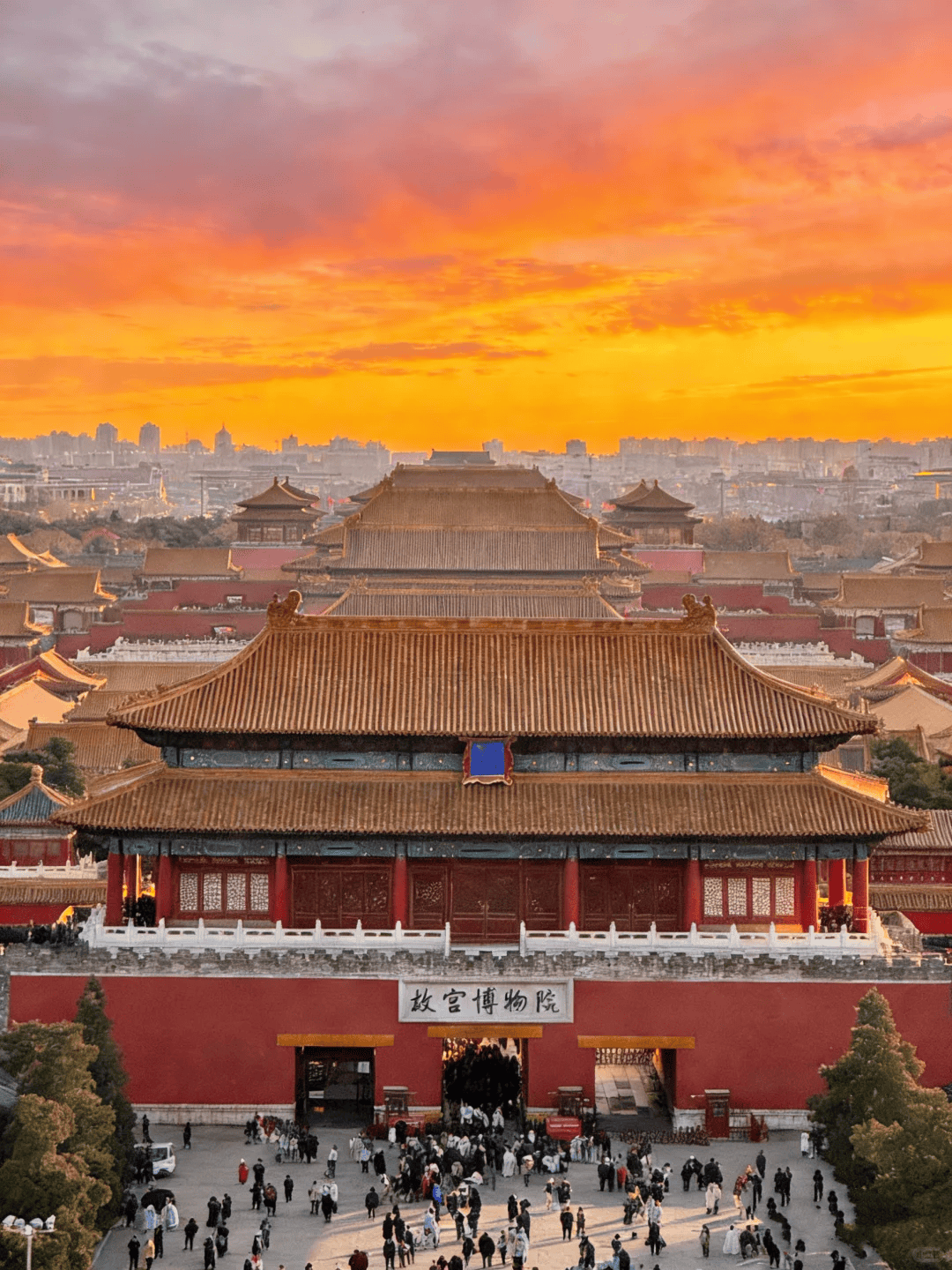
The heart of imperial China is the Forbidden City, also known as the Palace Museum.
For nearly 500 years, this massive complex served as the home of emperors and the political center of China.
Walking through its gates feels like entering a completely different world:
- Golden rooftops stretching across vast courtyards
- Symmetrical halls built on cosmic principles
- Intricate dragon carvings symbolizing imperial power
- Silent corridors where history still feels present
Highlights include:
- Hall of Supreme Harmony
- Imperial Garden
- Gate of Heavenly Purity
- Thousands of preserved cultural relics
For visitors interested in Chinese history, this is one of the most important cultural sites in the world.
2. The Great Wall of China: Walking One of Humanity’s Greatest Wonders


7
No trip to Beijing is complete without visiting the Great Wall of China.
Just outside the city lies one of the most iconic structures ever built by humans, stretching thousands of kilometers across mountains, deserts, and grasslands.
The most popular sections near Beijing include Mutianyu and Badaling, each offering different experiences:
- Mutianyu: quieter, scenic, surrounded by forest
- Badaling: more developed and accessible
Visitors can:
- Hike along ancient stone steps
- Climb watchtowers with panoramic views
- Take cable cars over mountain ridges
- Experience sunrise or sunset over the wall
Standing on the Great Wall is often described as one of the most emotional travel experiences in China.
3. Temple of Heaven: Where Emperors Prayed for Good Harvests


5
The Temple of Heaven is one of the most elegant examples of classical Chinese architecture.
Built during the Ming Dynasty, it was used by emperors to pray for good harvests and divine blessing.
Today, it is also a living public park where locals gather daily for:
- Tai Chi practice
- Traditional music performances
- Morning exercise groups
- Community dance sessions
This unique blend of imperial history and modern daily life gives visitors a deeper understanding of how culture continues in China.
4. Explore Beijing Hutongs: The Soul of Old City Life


8
Beyond grand palaces and monuments, Beijing’s most authentic life exists in its hutongs—narrow alleyways lined with traditional courtyard homes.
These neighborhoods represent centuries of local living culture and remain one of the most immersive ways to experience the city.
In the hutongs, travelers can:
- Ride a rickshaw through historic alleys
- Visit traditional courtyard homes (siheyuan)
- Try local street snacks
- Observe daily life of long-time residents
- Discover hidden cafés and artisan shops
Popular hutong areas include Nanluoguxiang and Shichahai, especially atmospheric at night.
5. Discover Beijing’s Modern Side: Architecture & Night Skyline


5
While Beijing is deeply historical, it is also one of the most futuristic cities in Asia.
The Beijing CBD showcases ultra-modern architecture including iconic structures like the CCTV Headquarters and the Olympic venues.
Key highlights include:
- The Bird’s Nest Stadium
- The Water Cube
- Futuristic skyscraper skyline
- LED-lit night cityscape
This contrast between ancient imperial design and modern innovation is one of Beijing’s most fascinating features.
6. What to Eat in Beijing: A Culinary Journey Through Imperial Flavors
Beijing’s food culture reflects its history as an imperial capital.
Must-try dishes include:
- Peking Duck (crispy skin, carved tableside)
- Zhajiang noodles
- Lamb hotpot
- Traditional Beijing snacks
- Sweet soybean milk breakfast sets
Dining in Beijing is not just about food—it is a cultural experience shaped by centuries of imperial influence and northern Chinese traditions.
Best Time to Visit Beijing
Spring (March–May)
- Cherry blossoms
- Mild temperatures
- Ideal sightseeing conditions
Summer (June–August)
- Lively atmosphere
- Cultural festivals
- Longer daylight hours
Autumn (September–November)
- Clear skies
- Golden foliage
- Best photography season
Winter (December–February)
- Snow-covered Great Wall
- Fewer tourists
- Atmospheric imperial scenery
Autumn is widely considered the best overall season.
Suggested 5-Day Beijing Itinerary
Day 1
- Forbidden City
- Tiananmen Square
- Wangfujing Street
Day 2
- Great Wall (Mutianyu or Badaling)
Day 3
- Temple of Heaven
- Hutong exploration
Day 4
- Summer Palace
- Lakeside walking routes
Day 5
- Beijing CBD modern architecture
- Olympic Park
Final Thoughts: Why Beijing Is More Than a Capital City
Beijing is not simply a destination you visit—it is a place you experience layer by layer.
Every courtyard, every stone path, every mountain ridge surrounding the city carries echoes of emperors, scholars, revolutionaries, and everyday citizens who shaped one of the world’s oldest continuous civilizations.
From the silent majesty of the Forbidden City to the dramatic horizon of the Great Wall, from peaceful temple parks to vibrant hutong alleys, Beijing offers a travel experience that is both deeply historical and strikingly modern.
For travelers seeking a journey that combines culture, architecture, cuisine, and meaning, Beijing is not just the beginning of China—it is the key to understanding it.
发表回复