The Tibet Travel Experience That Feels Like Entering Another Civilization
There are places in the world where history survives in museums. Tibet is not one of them.
In Tibet, spirituality still breathes through stone walls blackened by centuries of yak butter smoke. Monks in crimson robes debate philosophy beneath snow mountains older than memory. Pilgrims whisper prayers while circling golden-roofed monasteries at dawn. Inside dim temple halls, thousands of flickering butter lamps illuminate ancient murals that outsiders once believed existed only in legends.
For many foreign travelers, a Tibet temple culture tour is not simply a vacation — it feels like crossing into a parallel world where time moves differently.
Unlike crowded modern tourist destinations, Tibet’s monasteries are still deeply alive. They are universities, meditation centers, sacred art galleries, pilgrimage destinations, and spiritual homes woven into everyday Tibetan life. Whether you are fascinated by Tibetan Buddhism, Himalayan architecture, meditation culture, photography, or ancient civilizations, Tibet offers one of the most immersive cultural journeys on Earth.
This 2026 Tibet temple culture guide explores the most unforgettable monasteries, hidden spiritual experiences, local rituals, and authentic encounters that international travelers rarely forget.
Why Foreign Travelers Are Fascinated by Tibet’s Temple Culture
For international visitors, Tibet offers something increasingly rare in modern travel: authenticity without performance.
Many travelers arrive expecting dramatic Himalayan scenery. What surprises them most is the emotional atmosphere inside Tibetan monasteries.
You do not simply “visit” temples in Tibet. You feel them.
The low chanting of monks vibrates through ancient prayer halls. Massive copper prayer wheels turn slowly beside corridors lined with hand-painted Buddhist murals. Elderly pilgrims prostrate themselves outside temple entrances while juniper incense drifts through cold mountain air.
Unlike historical monuments elsewhere, Tibet’s monasteries remain active spiritual worlds.
Foreign travelers are especially drawn to:
- Tibetan Buddhist philosophy
- Meditation and mindfulness culture
- Himalayan monastery architecture
- Sacred Buddhist art and murals
- Monastic debate traditions
- Hidden mountain temples
- Pilgrimage rituals
- Spiritual photography experiences
- Authentic local encounters beyond mass tourism
For travelers tired of commercialized destinations, Tibet often feels profoundly real.
Potala Palace: Tibet’s Most Iconic Spiritual Landmark


6
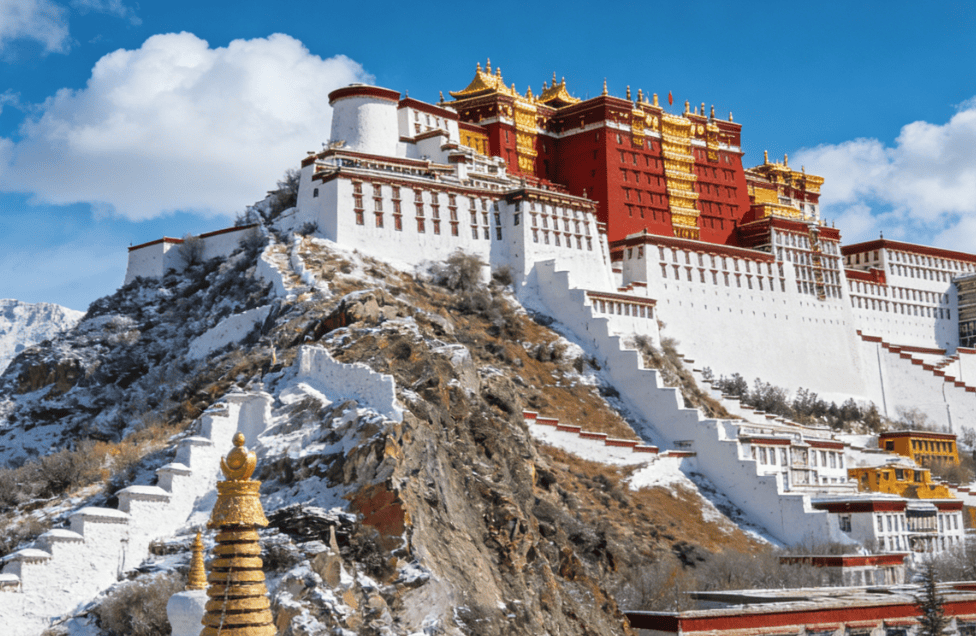
No Tibet temple culture journey begins anywhere else but Potala Palace.
Rising above the city of Lhasa like a mountain fortress from another age, the Potala Palace once served as the winter residence of the Dalai Lamas. For many foreign visitors, the first sight of the palace feels surreal — white walls climbing toward the sky beneath impossibly blue Himalayan light.
Inside, the atmosphere changes completely.
Dark corridors glow with butter lamps. Ancient stupas covered in gold and jewels stand silently in sacred halls. The scent of incense lingers in rooms filled with chanting echoes and centuries of prayer.
Visitors fascinated by history and architecture will discover:
- Tibetan Buddhist murals
- Ancient manuscripts
- Meditation chapels
- Sacred burial stupas
- Traditional Tibetan woodwork
- Himalayan religious symbolism
The palace is not simply beautiful — it feels spiritually dense, as though every wall carries memory.
Jokhang Temple: The Living Soul of Tibetan Buddhism
If Potala Palace represents Tibet’s grandeur, Jokhang Temple represents its heartbeat.
Located in the center of old Lhasa, Jokhang Temple is considered the holiest temple in Tibetan Buddhism. Pilgrims travel across deserts, mountains, and grasslands to pray here.
Outside the temple, the famous Barkhor Street pilgrimage route circles continuously with monks, nomads, traders, and worshippers spinning prayer wheels and murmuring sacred mantras.
Foreign visitors are often deeply moved by the human devotion visible everywhere:
- Pilgrims performing full-body prostrations
- Families carrying children to receive blessings
- Elderly Tibetans counting prayer beads
- Monks chanting in smoky temple halls
At sunrise, the golden rooftops glow above clouds of incense while thousands of butter lamps flicker inside the temple.
It is one of the most emotionally powerful places in Tibet.
Sera Monastery: The Famous Monk Debates


6
One of the most fascinating cultural experiences for foreign travelers is visiting Sera Monastery during afternoon debate sessions.
Here, monks gather in shaded courtyards to practice Buddhist philosophy through energetic public debate.
The atmosphere surprises many visitors:
- Monks clap loudly during arguments
- Questions are delivered dramatically
- Philosophical discussions become physical performances
- Logic and spirituality combine in extraordinary ways
Unlike silent meditation stereotypes, Tibetan Buddhism here appears dynamic, intellectual, and alive.
For photographers and culture-focused travelers, Sera Monastery offers one of Tibet’s most visually unique experiences.
Ganden Monastery: Tibet’s Hidden Mountain Sanctuary


6
Far from the busiest tourist routes lies Ganden Monastery, perched high on a mountain ridge surrounded by dramatic valleys and endless sky.
Many foreign travelers consider Ganden one of Tibet’s most atmospheric monasteries because of its isolation and scenery.
The monastery’s mountain Kora trail offers:
- Panoramic Himalayan views
- Massive prayer flag fields
- Meditation caves
- Remote spiritual landscapes
- Incredible sunrise photography
Unlike crowded urban attractions, Ganden feels quiet and contemplative.
When clouds roll through the mountains and monks chant inside ancient halls, the entire monastery seems suspended between earth and sky.
Sakya Monastery: Tibet’s Secret Library Fortress


7
Many foreign visitors have never heard of Sakya Monastery before arriving in Tibet — yet it often becomes one of the most unforgettable stops.
Unlike Tibet’s red-and-white monasteries, Sakya is famous for its grey fortress-like walls and enormous collection of ancient Buddhist manuscripts.
Inside are:
- Rare Tibetan scriptures
- Giant Buddhist murals
- Ancient tantric artwork
- Massive prayer halls
- Hidden library chambers
The monastery feels mysterious and cinematic, almost like an ancient lost kingdom hidden in the Himalayas.
For travelers interested in Tibetan history, religion, and sacred art, Sakya offers a completely different side of Tibet’s temple culture.
Experiencing Tibetan Temple Rituals as a Visitor
One reason foreign travelers become deeply attached to Tibet is the opportunity to respectfully witness living spiritual traditions.
Common monastery experiences include:
- Lighting yak butter lamps
- Listening to monk chanting ceremonies
- Watching sand mandala creation
- Turning giant prayer wheels
- Receiving monastery blessings
- Drinking Tibetan butter tea with monks
- Participating in meditation sessions
- Watching pilgrims complete sacred circuits
Visitors should always respect local customs:
- Walk clockwise around temples
- Dress modestly
- Speak softly inside prayer halls
- Avoid flash photography
- Ask permission before photographing monks or pilgrims
Tibetan temples are not staged tourist attractions. They are sacred spaces first.
The more respectfully travelers approach them, the more meaningful the experience becomes.
Tibetan Temple Art: A Hidden Treasure for Foreign Travelers
Many travelers are shocked by the richness of Tibetan Buddhist art hidden inside monasteries.
Temple interiors contain:
- Hand-painted thangka murals
- Gold Buddha statues
- Ancient mandalas
- Giant silk tapestries
- Intricate wood carvings
- Sacred symbolic imagery
Unlike museum displays, these artworks still function within active spiritual life.
Monks pray before them daily. Pilgrims leave offerings beside them. Butter lamps illuminate them exactly as they have for centuries.
For photographers, artists, and culture lovers, Tibet’s monasteries offer one of the world’s most visually distinctive artistic traditions.
Best Time for a Tibet Temple Culture Tour
The best seasons for visiting Tibetan monasteries are:
April to June
- Clear mountain views
- Comfortable temperatures
- Excellent photography conditions
- Fewer crowds
September to October
- Bright blue skies
- Beautiful autumn light
- Major Tibetan religious festivals
- Comfortable travel weather
Winter also offers extraordinary monastery photography with fewer tourists and dramatic snowy landscapes.
Why Tibet’s Temples Stay in Travelers’ Memories Forever
Most travelers visit Tibet expecting mountains.
Many leave remembering candlelight.
Long after the journey ends, people recall the sound of monks chanting in dark temple halls, the smell of juniper smoke drifting through ancient courtyards, and the sight of pilgrims praying beneath golden monastery roofs against the vast Himalayan sky.
A Tibet temple culture tour is not simply about seeing famous landmarks. It is about encountering a civilization that still places spirituality at the center of daily life.
In a world dominated by speed, noise, and constant distraction, Tibet’s monasteries offer something unexpectedly powerful: stillness.
And sometimes, for travelers crossing the roof of the world, that stillness becomes the most unforgettable destination of all.
发表回复