The City That Quietly Tells China’s Greatest Stories
Most travelers arrive in China with a familiar list: Beijing for imperial history, Shanghai for modern skylines, Xi’an for the Terracotta Warriors.
Very few put Nanjing at the top of their itinerary.
And that may be the biggest mistake first-time visitors make.
Nanjing is a city that doesn’t shout for attention. It doesn’t compete with Shanghai’s glamour or Beijing’s grandeur. Instead, it unfolds slowly, revealing layers of history, culture, and everyday life that many visitors never expect.
Walk through a 600-year-old city gate in the morning, sip coffee beside a tree-lined lake at noon, and watch lanterns glow along an ancient river after sunset. In Nanjing, the past is not locked away in museums—it lives alongside the present.
For travelers seeking a deeper understanding of China beyond the usual tourist trail, Nanjing may become the most rewarding city they visit.
Why Visit Nanjing?
Located in eastern China on the banks of the Yangtze River, Nanjing has served as the capital of multiple Chinese dynasties and governments throughout history.
Its name literally means “Southern Capital.”
Today, Nanjing combines historical significance with a youthful energy driven by universities, technology industries, and a vibrant cultural scene.
Visitors come for:
- Ancient city walls
- Imperial-era architecture
- Beautiful lakes and parks
- Historic neighborhoods
- Rich food culture
- Fewer crowds than Beijing or Shanghai
- Authentic local experiences
The city offers a balance that many travelers find refreshing: enough history to fascinate, yet modern enough to feel comfortable and accessible.
Walk Along One of the World’s Longest Ancient City Walls
The Nanjing City Wall
One of Nanjing’s greatest treasures is its remarkably preserved city wall.
Built during the Ming Dynasty in the 14th century, the wall once stretched more than 35 kilometers around the city. Large sections remain intact today, making it one of the longest surviving ancient city walls on Earth.
Walking along the wall offers a unique perspective of Nanjing.
On one side, modern skyscrapers rise into the sky. On the other, historic neighborhoods and traditional rooftops spread across the landscape.
Few places in China demonstrate the coexistence of ancient and modern life so vividly.
Explore the Presidential Palace
A Window Into Modern Chinese History
History enthusiasts should not miss the Presidential Palace.
Unlike imperial palaces found elsewhere in China, this site tells the story of China’s transition into the modern era.
The complex served as a political center during some of the most significant moments in modern Chinese history.
Visitors can explore elegant gardens, historic offices, courtyards, and exhibitions that help explain the events that shaped contemporary China.
The grounds are surprisingly peaceful and provide an excellent introduction to Nanjing’s historical importance.
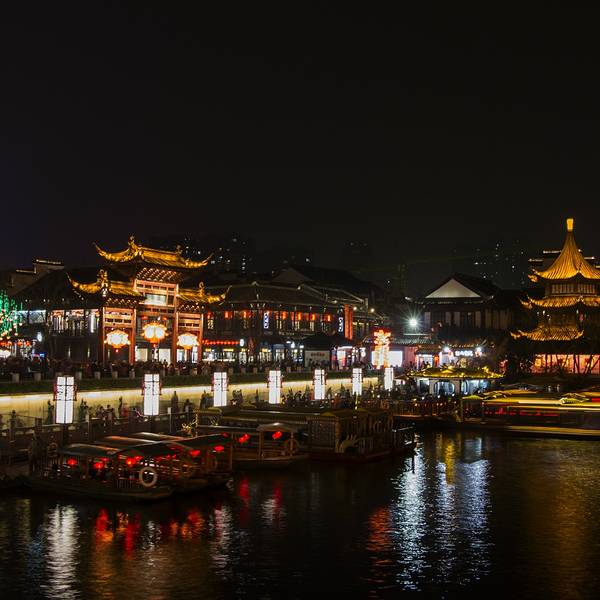
Experience the Atmosphere of Qinhuai River
Nanjing’s Most Beautiful Evening Destination
If there’s one place that captures the romantic side of Nanjing, it’s the Qinhuai River district.
As daylight fades, traditional buildings illuminate with warm lantern light. Boats glide across the water while visitors stroll through narrow streets filled with local snacks and cultural performances.
The atmosphere feels distinctly Chinese without feeling overly commercialized.
A river cruise after sunset is one of the most memorable experiences in the city.
Nearby, the famous Confucius Temple area provides a lively mix of history, shopping, and local cuisine.
Visit Dr. Sun Yat-sen’s Mausoleum
A Monument Surrounded by Forested Hills
Set against the scenic backdrop of Purple Mountain, the Mausoleum of Sun Yat-sen is one of China’s most important historical landmarks.
The site honors the revolutionary leader widely regarded as the father of modern China.
The climb up the grand staircase rewards visitors with panoramic views and impressive architecture.
Even travelers with limited interest in politics often appreciate the beauty and symbolism of the site.
The surrounding area also offers excellent hiking trails and natural scenery.
Purple Mountain: Where Nature Meets History
Many visitors are surprised by how green Nanjing feels.
Purple Mountain is a perfect example.
The area combines forests, temples, historic sites, and scenic viewpoints, creating one of the city’s most enjoyable outdoor destinations.
Popular attractions include:
- Sun Yat-sen Mausoleum
- Ming Xiaoling Mausoleum
- Linggu Temple
- Scenic hiking routes
- Observation points overlooking the city
Spring and autumn are particularly beautiful times to explore the area.
Discover the Beauty of Xuanwu Lake
For a break from sightseeing, head to Xuanwu Lake.
Located beside the ancient city wall, this enormous urban lake offers walking trails, gardens, bridges, and peaceful island parks.
Locals gather here to exercise, practice tai chi, and enjoy the outdoors.
It is one of the best places in the city to experience everyday life in Nanjing.
Photographers will especially appreciate the contrast between the tranquil lake and the modern skyline beyond.
What to Eat in Nanjing
Food is an essential part of the Nanjing experience.
Local specialties include:
- Nanjing Salted Duck
- Duck Blood Vermicelli Soup
- Steamed Dumplings
- Sesame Pancakes
- Tangbao Soup Dumplings
- Traditional Jiangsu Cuisine
Unlike the fiery flavors of Sichuan or Hunan, Nanjing cuisine tends to be balanced, delicate, and subtly flavorful.
Many travelers discover that some of their favorite meals in China happen here.
Best Time to Visit Nanjing
Spring (March–May)
Cherry blossoms, comfortable temperatures, and blooming parks make spring one of the most attractive seasons.
Autumn (September–November)
Cool weather and colorful foliage create ideal sightseeing conditions.
Summer can be hot and humid, while winter offers fewer crowds and a more local atmosphere.
Suggested 3-Day Nanjing Itinerary
Day 1
- Nanjing City Wall
- Xuanwu Lake
- Evening walk along Qinhuai River
Day 2
- Sun Yat-sen Mausoleum
- Purple Mountain
- Ming Xiaoling Mausoleum
Day 3
- Presidential Palace
- Confucius Temple Area
- Local food exploration
This itinerary provides a balanced introduction to both the city’s historical significance and its contemporary charm.
Final Thoughts: The China You Discover When You Slow Down
Some cities impress immediately.
Others reveal their character gradually.
Nanjing belongs firmly in the second category.
Its beauty isn’t concentrated in a single landmark or famous photograph. Instead, it’s found in the quiet moments between attractions: morning mist over Xuanwu Lake, cyclists passing beneath ancient walls, students gathering in leafy university districts, lantern reflections dancing on the Qinhuai River.
Nanjing rewards curiosity.
For travelers willing to look beyond China’s most famous destinations, it offers something increasingly rare in modern tourism—a city rich in history, deeply authentic, and still capable of surprising even experienced visitors.
Long after you’ve left, you may find yourself remembering Nanjing not as a stop on your China itinerary, but as the place where China’s past and present finally began to make sense.

发表回复