Why Tibet Is Unlike Anywhere Else on Earth
Some places are beautiful.
Some places are historic.
A few places are adventurous.
Tibet is all three at once.
Long before your plane lands in Lhasa, the landscape begins to change. The cities disappear. Rivers carve through endless valleys. Snow-covered peaks stretch beyond the horizon. The air feels different. The silence feels different.
For many travelers, Tibet isn’t simply another destination on a bucket list. It’s the kind of journey people dream about for years before finally deciding to go.
Whether you’re drawn by Himalayan scenery, ancient Buddhist culture, sacred monasteries, or the thrill of standing on the “Roof of the World,” Tibet offers experiences that cannot be replicated anywhere else in Asia.
If you’re planning your first Tibet adventure, this guide covers everything you need to know before visiting one of the world’s most fascinating regions.
Where Is Tibet?
Tibet, officially known as the Tibet Autonomous Region of China, is located in southwestern China on the Tibetan Plateau.
At an average elevation of more than 4,000 meters (13,000 feet), Tibet is often called the highest inhabited region on Earth.
Its capital city, Lhasa, serves as the cultural and spiritual heart of Tibetan Buddhism and the gateway to most Tibet travel itineraries.
Best Time to Visit Tibet
Spring (April–May)
Spring offers comfortable temperatures, clear mountain views, and relatively fewer visitors.
Ideal for:
- Cultural sightseeing
- Photography
- Monastery visits
Summer (June–August)
The most popular travel season.
Advantages include:
- Pleasant daytime temperatures
- Vibrant festivals
- Accessible mountain roads
This is also the busiest period for international travelers.
Autumn (September–October)
Many experienced travelers consider autumn the best season for Tibet.
You’ll enjoy:
- Crystal-clear skies
- Excellent visibility for Himalayan views
- Comfortable weather
- Stunning photography conditions
Winter (November–March)
Winter reveals a quieter side of Tibet.
Benefits include:
- Fewer tourists
- Lower travel costs
- Authentic local atmosphere
Lhasa remains surprisingly comfortable during sunny winter days.
Top Places to Visit in Tibet
1. Lhasa – The Spiritual Heart of Tibet
Most travelers begin their Tibet journey in Lhasa.
At over 3,600 meters above sea level, it’s also the ideal place to acclimatize before exploring higher-altitude regions.
Must-see attractions include:
- Potala Palace
- Jokhang Temple
- Barkhor Street
- Traditional Tibetan tea houses
- Local handicraft markets
Walking around Barkhor Street at sunrise is one of Tibet’s most memorable experiences. Pilgrims circle the sacred temple while spinning prayer wheels and chanting ancient prayers.
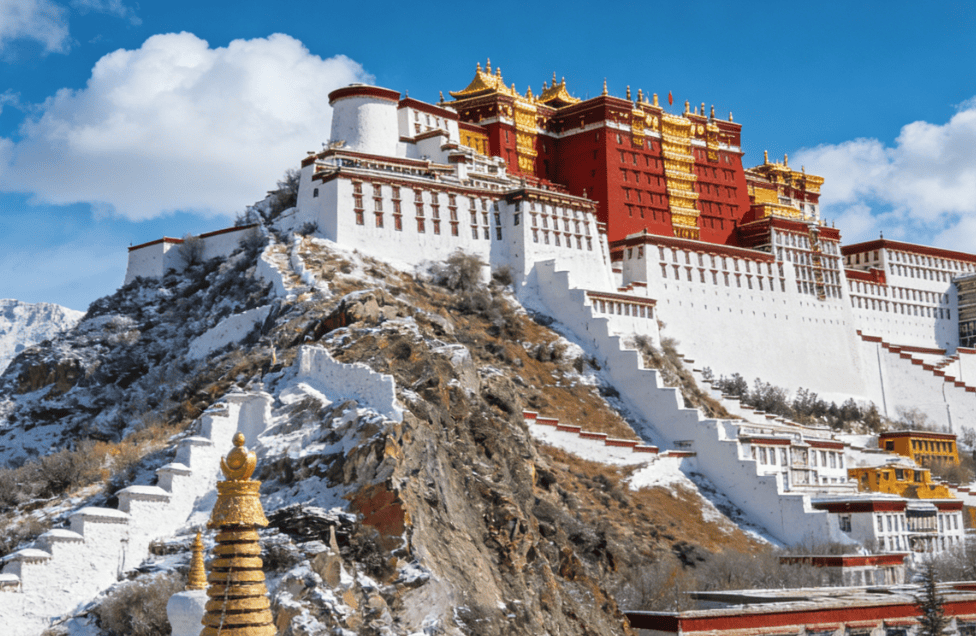
2. Potala Palace
The Potala Palace is one of Asia’s most iconic landmarks.
Perched high above Lhasa, the palace served as the winter residence of the Dalai Lamas for centuries.
Inside you’ll discover:
- Sacred chapels
- Ancient murals
- Buddhist relics
- Royal chambers
- Panoramic views across Lhasa
Even travelers who have visited famous sites worldwide often describe their first sight of Potala Palace as unforgettable.
3. Yamdrok Lake
Few places in Tibet look as surreal as Yamdrok Lake.
Its turquoise water contrasts dramatically with the surrounding mountains and open grasslands.
Many photographers consider it one of the most beautiful lakes in all of Asia.
4. Everest Base Camp Tibet
For many international visitors, reaching Everest Base Camp is the ultimate Tibet experience.
Unlike the Nepal side, Tibet offers spectacular panoramic views of Mount Everest’s northern face.
Highlights include:
- Himalayan scenery
- High-altitude adventure
- Remote Tibetan villages
- Stunning night skies
- Sunrise over Mount Everest
Seeing the world’s highest mountain emerge from the darkness at dawn is a moment many travelers never forget.
5. Namtso Lake
Located at more than 4,700 meters above sea level, Namtso is one of Tibet’s most sacred lakes.
The combination of crystal-clear water, vast skies, and snow-covered peaks creates landscapes that feel almost unreal.
6. Shigatse and Traditional Tibetan Culture
Western travelers seeking deeper cultural experiences should spend time in Shigatse.
Here you’ll find:
- Ancient monasteries
- Traditional Tibetan neighborhoods
- Local markets
- Authentic religious ceremonies
Life moves at a slower pace, offering valuable insight into everyday Tibetan culture.
What Makes Tibet Different from Other Destinations?
Many destinations focus on landmarks.
Tibet focuses on atmosphere.
The experience is not only about sightseeing.
It’s about:
- Listening to monks chanting inside centuries-old monasteries
- Watching pilgrims complete sacred journeys
- Drinking butter tea with local families
- Driving across landscapes that seem untouched by modern development
- Witnessing one of the world’s oldest living spiritual traditions
This cultural depth is what leaves the strongest impression on most visitors.
Understanding Altitude in Tibet
The biggest challenge for first-time visitors is altitude.
Helpful tips include:
- Spend your first two days relaxing in Lhasa
- Stay hydrated
- Avoid intense physical activity initially
- Limit alcohol consumption
- Sleep well
- Follow your guide’s recommendations
Most travelers adapt successfully when they allow enough time for acclimatization.
What Food Should You Try in Tibet?
Tibetan cuisine is hearty and designed for high-altitude living.
Popular dishes include:
Yak Meat
Tender, flavorful, and commonly served throughout Tibet.
Tibetan Noodles
A comforting local staple.
Butter Tea
The most famous Tibetan beverage.
Momos
Traditional dumplings filled with meat or vegetables.
Tibetan Hot Pot
Perfect for cold evenings in the mountains.
Food lovers often find Tibetan cuisine refreshingly different from other regional Chinese cuisines.
How Many Days Should You Spend in Tibet?
5-Day Tibet Trip
- Lhasa
- Potala Palace
- Jokhang Temple
- Yamdrok Lake
8-Day Tibet Adventure
- Lhasa
- Shigatse
- Everest Base Camp
10–12 Day Tibet Journey
- Lhasa
- Yamdrok Lake
- Shigatse
- Everest Base Camp
- Namtso Lake
This itinerary offers a balance of culture, nature, and adventure.
Essential Tibet Travel Tips for Foreign Visitors
Before traveling to Tibet:
- Carry your passport at all times.
- Obtain the required Tibet travel permit through an authorized travel agency.
- Bring sunscreen and sunglasses.
- Pack layers for changing mountain weather.
- Travel insurance is strongly recommended.
- Prepare for limited internet access in remote areas.
- Respect local religious customs and photography restrictions.
A little preparation makes the experience much smoother.
Is Tibet Worth Visiting?
There are countless beautiful places in the world. There are only a handful that genuinely change the way you think about travel.
Tibet belongs to that rare category.
You may arrive expecting dramatic mountains and famous monasteries. Instead, you’ll leave with something harder to describe: a deeper appreciation for silence, spirituality, and the extraordinary resilience of people who have lived among the highest mountains on Earth for centuries.
Long after the photographs are stored away and the souvenirs are forgotten, many travelers discover that Tibet remains vividly present in their memory. It lingers in the sound of prayer wheels turning in the wind, in the sight of Everest glowing beneath the first light of dawn, and in the realization that some journeys are measured not by distance traveled, but by perspective gained. For those seeking the most profound travel experience in China, Tibet stands in a league of its own.
发表回复