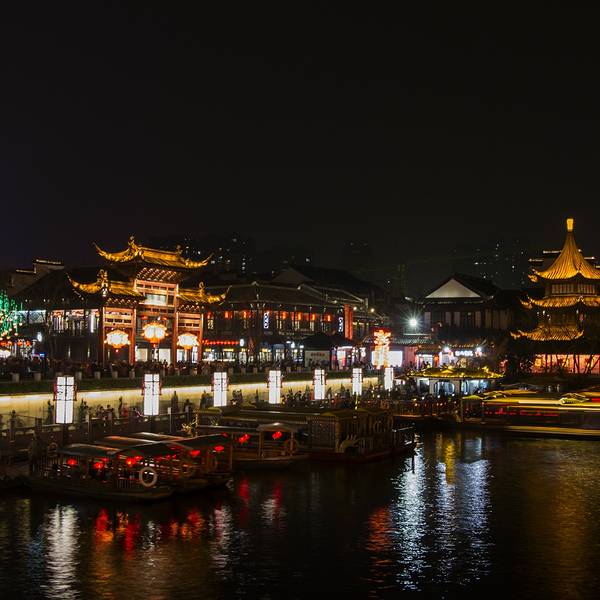
Most travelers come to Hunan for the “Avatar mountains.” Fewer know that, a few hours away, a cliffside valley glows at night like a lantern-lit painting. Pairing Wangxian Valley with Zhangjiajie creates a journey that moves from fantasy geology to living village theater—from sandstone pillars rising through cloud seas to wooden eaves dripping with red lantern light. This guide is designed for international visitors who want more than viewpoints: travelers who want to walk village lanes after dark, learn local crafts, taste Hunan heat, and experience places where residents actually gather.
Nightfall Magic in Wangxian Valley Scenic Area


7
By day, Wangxian Valley is a photogenic gorge of bridges, waterfalls, and timber houses clinging to rock. By night, it transforms into a dreamscape as thousands of lanterns illuminate the cliffs and mist.
How to participate
- Arrive before dusk and stay through full darkness for the light transition
- Sit on a teahouse balcony and try local green tea while the lanterns come alive
- Walk the upper bridges slowly—residents and performers mingle naturally after dinner
This is less a “scenic spot” and more an evening ritual of light, sound, and strolling.
Sandstone Spires of Zhangjiajie National Forest Park


6
The world’s most famous quartz-sandstone pillar landscape feels otherworldly, especially at sunrise when mist threads between the peaks.
How to participate
- Start early to watch clouds drift through the pillars from a quiet boardwalk
- Choose walking trails over constant shuttle buses to feel the forest scale
- Keep snacks sealed—macaques are clever and curious
You’re not just viewing geology; you’re moving inside a vertical maze of stone and cloud.
Glass, Height, and Nerve at Zhangjiajie Grand Canyon Glass Bridge


6
Suspended high above a lush canyon, the glass bridge delivers adrenaline with panoramic views.
How to participate
- Walk once for photos, then a second time just to look outward, not down
- Pair the bridge with a canyon hike or zipline for a full vertical experience
A modern contrast to the ancient stone towers nearby.
Local Evenings in Wulingyuan District


6
After the park closes, Wulingyuan’s food streets fill with locals sharing spicy dishes and cold drinks.
How to participate
- Order chopped chili fish head or smoked pork with garlic shoots
- Learn to say “less spicy” in Chinese—Hunan heat is legendary
- Visit a small tea shop for post-dinner conversation
This is where the day’s hiking stories get traded over sizzling plates.
Folk Memory and Craft at Tujia Folk Customs Park


6
Home to Tujia heritage, this area preserves brocade weaving, wooden stilt houses, and rhythmic drum dances.
How to participate
- Try simple brocade weaving on a loom with a local artisan
- Ask about house carvings and their protective symbols
- Stay for an evening dance performance if scheduled
A tactile introduction to the people who have long called these mountains home.
Practical Route: Pairing the Two Destinations
- Fly or train into Zhangjiajie first for 2–3 days of hiking and canyon views
- Travel onward to Wangxian Valley for a contrasting 1–2 nights of lantern-lit wandering
- Pack light rain protection; mist and drizzle enhance the scenery but surprise visitors
- Wear grippy shoes—stone paths can be slick after dark in the valley
Why This Pairing Feels Like Traveling Through Two Worlds
Zhangjiajie lifts your eyes to impossible stone forests sculpted by time. Wangxian Valley lowers your pace to the rhythm of lantern light and wooden footsteps after dusk. One is a cathedral of geology; the other, a theater of village life. Together, they create a journey that balances awe with intimacy, viewpoints with participation, and spectacle with human warmth.
Plan this trip not as a race between landmarks, but as a passage between daytime wonder and nighttime atmosphere—a Hunan experience you will remember by both the cliffs you climbed and the lanterns you walked beneath.
发表回复