Some Destinations Change Your Itinerary. Tibet Changes Your Perspective.
Most travel memories eventually fade into a collection of photographs.
Tibet is different.
Years after visiting, travelers often remember surprisingly small moments: the silence of a mountain valley at dawn, the sound of prayer wheels turning in a monastery courtyard, the sight of snow-covered peaks appearing above clouds that seem close enough to touch.
At over 4,000 meters above sea level, Tibet is often called the Roof of the World. But altitude alone doesn’t explain its appeal.
What makes Tibet unforgettable is the sense of scale. The mountains are bigger. The skies feel wider. Distances seem endless. Even time appears to move differently here.
For travelers searching for one of the most extraordinary journeys in Asia, Tibet offers an experience unlike anywhere else on Earth.
Why Visit Tibet?
Located on the vast Tibetan Plateau in western China, Tibet combines dramatic landscapes, centuries-old culture, sacred religious sites, and some of the world’s most spectacular overland journeys.
Unlike many destinations where attractions are concentrated in one city, Tibet is an adventure that unfolds across enormous distances.
Visitors come to experience:
- Himalayan mountain scenery
- Ancient monasteries
- High-altitude lakes
- Tibetan culture and traditions
- Historic pilgrimage routes
- Remote landscapes
- Unique wildlife
- One of the world’s most scenic train journeys
Every day in Tibet feels different from the last.
Lhasa: The Heart of Tibet
Where Most Tibet Journeys Begin
For many travelers, the first glimpse of Lhasa is unforgettable.
Set against a backdrop of mountains and brilliant blue skies, Tibet’s capital combines ancient traditions with modern daily life.
Pilgrims walk ancient routes while local markets bustle with activity. Prayer flags flutter above rooftops, and incense drifts through temple courtyards.
Lhasa serves as both the spiritual and cultural center of Tibet.
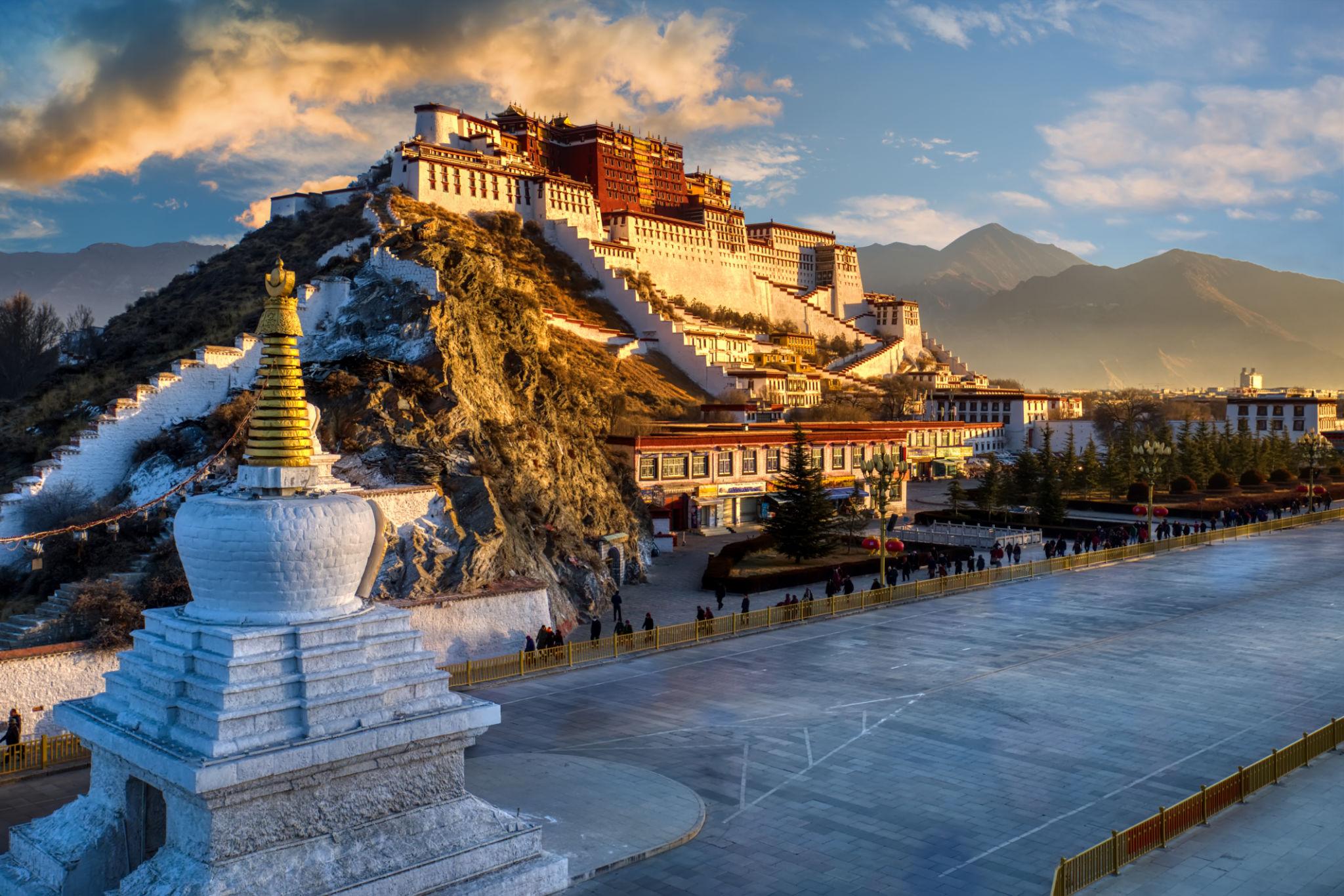
Visit the Potala Palace
Tibet’s Most Iconic Landmark
Towering above the city, the Potala Palace is one of the most recognizable buildings in Asia.
Originally serving as the winter residence of successive Dalai Lamas, the palace rises dramatically from Red Hill and dominates the Lhasa skyline.
Inside, visitors discover:
- Elaborate chapels
- Historic murals
- Sacred relics
- Intricate Tibetan artwork
- Panoramic city views
Even travelers who have visited famous landmarks around the world are often surprised by the sheer scale and atmosphere of the palace.
The best views are often found from a distance, particularly at sunrise and sunset when the structure glows against the surrounding mountains.
Walk the Barkhor Circuit
One of the most meaningful experiences in Tibet requires no ticket and no tour guide.
Simply join local pilgrims walking the Barkhor Circuit around the Jokhang Temple.
The route has been used for centuries by worshippers from across the Tibetan Plateau.
Walking alongside pilgrims provides a glimpse into everyday spiritual life that many visitors find deeply moving.
The surrounding streets are filled with traditional shops, local restaurants, and market stalls selling Tibetan handicrafts.
Explore Jokhang Temple
At the center of old Lhasa stands Jokhang Temple, considered the most sacred temple in Tibetan Buddhism.
For centuries, pilgrims have traveled thousands of kilometers to pray here.
Inside, the atmosphere is unlike any museum or historic site.
Butter lamps flicker in dimly lit halls. Monks chant prayers. Visitors encounter a living religious tradition that remains deeply woven into Tibetan society.
The temple offers one of the most authentic cultural experiences in Tibet.
Journey to Yamdrok Lake
One of the Most Beautiful Lakes in Asia
Few photographs fully capture the color of Yamdrok Lake.
Depending on the weather and sunlight, the water can appear turquoise, sapphire blue, or emerald green.
Surrounded by snow-capped peaks and rolling grasslands, the lake creates one of Tibet’s most iconic landscapes.
The drive from Lhasa to Yamdrok Lake is an attraction in itself, passing mountain passes that exceed 4,700 meters above sea level.
For many travelers, this is the moment when they truly understand the scale of the Tibetan Plateau.
Discover Everest Base Camp in Tibet
Standing Face to Face With the World’s Highest Mountain
For adventurous travelers, Everest Base Camp is often the highlight of a Tibet journey.
The Tibetan side offers some of the most dramatic views of Mount Everest anywhere in the world.
Unlike many mountain destinations, the landscape surrounding Everest is surprisingly vast and open.
Watching sunrise illuminate the summit of Everest is an experience that remains difficult to describe—even for seasoned travelers.
The journey there passes through remote villages, high mountain passes, and landscapes that feel almost otherworldly.
Experience the Qinghai-Tibet Railway
One of the World’s Greatest Train Journeys
Many visitors consider the journey to Tibet just as memorable as the destination itself.
The Qinghai-Tibet Railway is the highest railway in the world, crossing vast stretches of alpine tundra, snow-covered mountains, and remote wilderness.
Passengers frequently spot:
- Wild yaks
- Tibetan antelope
- Vast grasslands
- Frozen lakes
- Distant mountain ranges
The route offers a gradual introduction to the Tibetan Plateau and some of the finest railway scenery anywhere on Earth.
Tibetan Food Worth Trying
Traveling in Tibet is also an opportunity to discover unique regional cuisine.
Popular dishes include:
- Yak Meat Dishes
- Tibetan Momos (dumplings)
- Tsampa (roasted barley flour)
- Tibetan Noodles
- Butter Tea
- Yak Yogurt
The cuisine reflects Tibet’s high-altitude environment and centuries of adaptation to life on the plateau.
Best Time to Visit Tibet
April to June
Comfortable temperatures and clear skies make spring one of the best seasons for sightseeing.
September to October
Autumn offers excellent visibility, pleasant weather, and stunning mountain views.
Summer is popular for festivals and lush landscapes, while winter provides fewer tourists and exceptional photography opportunities.
Suggested 7-Day Tibet Itinerary
Day 1
Arrive in Lhasa and acclimatize.
Day 2
Visit Potala Palace and Jokhang Temple.
Day 3
Explore Barkhor Street and local culture.
Day 4
Day trip to Yamdrok Lake.
Day 5
Travel toward Shigatse.
Day 6
Journey to Everest Base Camp.
Day 7
Return and depart.
This itinerary balances cultural exploration with some of Tibet’s most spectacular natural scenery.
Final Thoughts: The Journey You Measure in Memories, Not Miles
Tibet is often described as a destination.
After visiting, that word feels too small.
A destination is somewhere you go, take photographs, and leave behind.
Tibet has a way of staying with you.
Perhaps it’s the vastness of the landscape. Perhaps it’s the resilience of the people who call this high plateau home. Or perhaps it’s the realization that in a world increasingly connected and crowded, places of true scale and silence still exist.
Long after the details of flights, hotels, and itineraries have faded, most travelers remember one thing above all else: the feeling of standing beneath an enormous Himalayan sky and realizing just how large—and how beautiful—the world can be.
For those seeking more than a vacation, Tibet offers something rarer: perspective.
发表回复