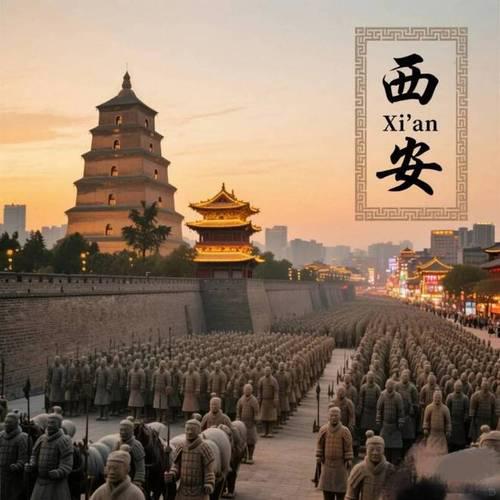
Before Beijing became China’s political heart and Shanghai rose as its financial giant, there was Xi’an — the ancient imperial capital where caravans from Persia, Central Asia, and the Middle East once arrived carrying spices, religions, music, and entirely new ways of eating.
Today, that history still lingers in the air. It rises from charcoal grills inside crowded alleyways, from hand-pulled noodles slapped against wooden tables, from cumin-scented night markets glowing beneath red lanterns, and from the rhythmic sound of cleavers cutting freshly baked flatbread before sunrise.
A food journey through Xi’an feels completely different from traveling anywhere else in China. Here, Chinese cuisine collides with Silk Road history, Islamic traditions, and northern Chinese comfort food to create one of the most distinctive culinary experiences in Asia.
For foreign travelers seeking authentic Chinese culture beyond modern skyscrapers and tourist clichés, Xi’an offers something increasingly rare: a city where history is not trapped inside museums — it is still alive on the dinner table.
Why Xi’an Is One of China’s Most Fascinating Food Destinations


7
Unlike coastal Chinese cities heavily shaped by globalization, Xi’an’s cuisine remains deeply rooted in ancient northern traditions and Silk Road influence.
Food here is bold, hearty, aromatic, and intensely satisfying. Wheat dominates the local diet more than rice, leading to an extraordinary noodle culture alongside baked breads, grilled meats, soups, and dumplings.
What surprises many international visitors most is how multicultural Xi’an food feels. Islamic culinary traditions introduced centuries ago still shape many of the city’s most famous dishes today.
The result is a food scene unlike anywhere else in East Asia.
The Muslim Quarter: Xi’an’s Most Legendary Food Experience


8
At the center of Xi’an’s culinary identity lies the famous Muslim Quarter.
As evening arrives, the neighborhood transforms into a glowing maze of smoke, spices, and nonstop movement. Lamb skewers sizzle over open flames while vendors pull noodles by hand under hanging lanterns. The scent of cumin, chili, garlic, and fresh bread fills the narrow streets.
For foreign travelers, the Muslim Quarter often becomes one of the most unforgettable food experiences in China because it feels both Chinese and unexpectedly international at the same time.
Popular foods include:
- Lamb skewers with cumin spice
- Fresh pomegranate juice
- Hand-pulled biang biang noodles
- Roujiamo (Chinese-style meat sandwich)
- Persimmon cakes
- Sesame flatbread
- Beef soup with torn bread
The atmosphere is energetic, chaotic, and highly photogenic — especially at night when neon lights reflect across old stone streets packed with locals and travelers alike.
Biang Biang Noodles: Xi’an’s Most Iconic Dish


6
No Xi’an food tour is complete without trying authentic biang biang noodles.
These thick handmade noodles — sometimes compared to giant belts — are dramatically stretched and slapped against counters before being topped with chili oil, garlic, vegetables, vinegar, and meat.
The dish is rustic, simple, and incredibly flavorful.
What makes biang biang noodles famous globally is not only the taste, but also the legendary Chinese character “biang,” considered one of the most complicated characters ever created.
For many international tourists, eating biang biang noodles becomes a symbolic Xi’an experience — messy, loud, spicy, and unforgettable.
Roujiamo: The “Chinese Burger” With Silk Road Roots


7
Long before modern hamburgers became global fast food, Xi’an already had roujiamo.
Often called the “Chinese hamburger,” this beloved street snack features slow-cooked meat chopped inside crispy flatbread baked in traditional ovens.
But calling it a burger barely explains the experience.
Authentic roujiamo combines centuries-old bread-making traditions with rich braised meat flavored by cinnamon, star anise, cloves, and other Silk Road spices.
For travelers, it becomes the perfect portable snack while exploring Xi’an’s ancient streets and city walls.
Ancient Tea Houses and Hidden Courtyard Restaurants


8
Beyond busy food streets, Xi’an also offers quieter culinary experiences hidden inside traditional courtyards.
Many old homes have been transformed into atmospheric restaurants where visitors dine beneath lanterns surrounded by ancient wooden architecture.
Tea culture remains deeply important here as well. Travelers can relax inside historic tea houses while tasting local snacks and watching traditional Chinese performances.
For foreigners interested in culture, these quieter spaces often reveal a more emotional and historical side of Xi’an beyond social media hotspots.
Xi’an Breakfast Culture: A Hidden Culinary Treasure
Most tourists focus only on Xi’an nightlife, but mornings in the city offer some of its most authentic food experiences.
Early street markets fill with workers and elderly residents eating:
- Fresh soybean milk
- Sesame pancakes
- Steamed dumplings
- Fried dough sticks
- Spicy soups
- Fresh noodles
The atmosphere feels deeply local and surprisingly untouched by tourism.
Travelers who wake up early discover a completely different rhythm of Xi’an — softer, slower, and more intimate than the crowded evening markets.
Why Foreign Travelers Love Xi’an Food Culture
One reason Xi’an has become increasingly popular among international visitors is that the city feels approachable.
Compared to some giant Chinese megacities, Xi’an offers:
- Walkable historical districts
- Strong street food culture
- Rich Silk Road history
- Friendly local atmosphere
- Affordable dining
- Distinctive cuisine unlike Western Chinese takeout food
Many travelers say Xi’an feels easier to emotionally connect with because daily life still happens visibly in public streets and local neighborhoods.
Food becomes a direct gateway into understanding local culture.
Combining Xi’an Food With Ancient Chinese History


6
Xi’an offers one of the rarest travel combinations in Asia: extraordinary food culture and world-famous historical landmarks in the same destination.
Travelers can spend mornings exploring:
- Terracotta Army
- Xi’an City Wall
- Big Wild Goose Pagoda
…and finish the evening eating cumin lamb skewers beneath lantern-lit alleys.
Unlike destinations where history feels disconnected from modern life, Xi’an’s ancient identity still shapes the city’s everyday culture — especially its food.
Best Seasons for a Xi’an Food Tour
- Spring (March–May): Pleasant temperatures and comfortable sightseeing weather.
- Autumn (September–November): Ideal for walking tours and night markets.
- Winter: Excellent for hot soups and hearty noodle dishes.
- Summer: Vibrant nighttime street food scene, though temperatures can be hot.
Autumn is often considered the best overall season for combining food exploration with historical sightseeing.
Final Thoughts: Why Xi’an Is China’s Most Underrated Culinary Journey
Some cities feed you. Xi’an tells you stories.
Every bowl of noodles, every grilled skewer, every torn piece of bread floating inside hot soup carries echoes of merchants, travelers, empires, and migrations that shaped Asia for thousands of years.
In Xi’an, food is not simply local cuisine — it is living Silk Road history.
For travelers searching for a version of China that feels ancient yet alive, chaotic yet deeply human, Xi’an offers one of the richest sensory journeys anywhere in the world.
And somewhere between the smoke of a midnight barbecue stall and the silence of ancient city walls at dawn, many visitors realize they are tasting far more than food — they are tasting the memory of civilizations.
发表回复